Align to Determine Purpose
Part 2 of 6 in series “How Do We Know What a University Capital Project Really Needs to Accomplish?”
Link to other posts in the series at the bottom of the page.
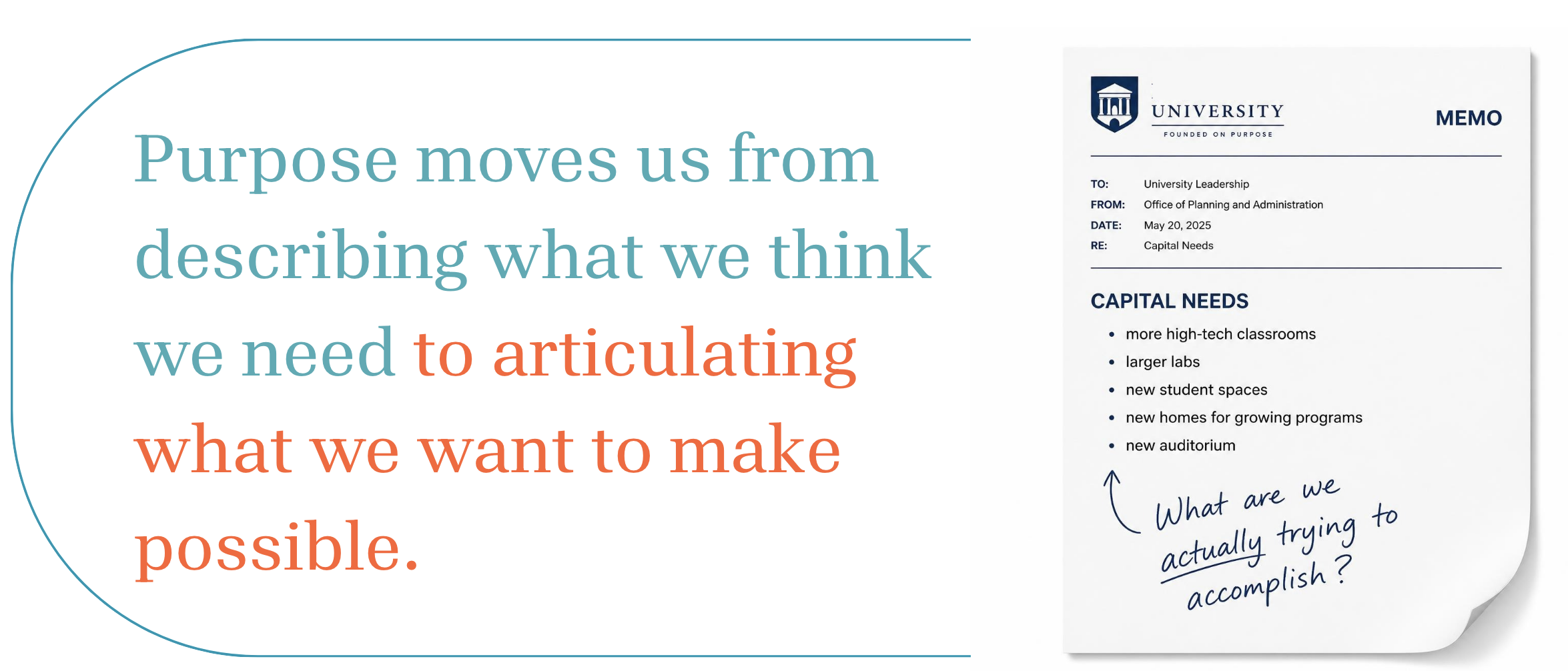
A capital need often arrives already translated into physical terms: more classrooms, a larger lab, a new student space, a renovated building, a new home for a growing program. Before accepting that translation, alignment asks us to investigate the purpose behind it by answering: What are we actually trying to accomplish?
Take a seemingly straightforward request for more student collaboration space. Maybe the institution really does need more of it. But why? Does it want students from different disciplines to work together? Project teams to continue working between scheduled classes? Stronger connections between students and faculty? More opportunities to work with industry or community partners? Students to spend more time on campus? A stronger sense of intellectual community?
Purpose moves us from describing what we think we need to articulating what we want to make possible. Each answer describes a different purpose. And each could ultimately produce a different need. That opens up the project.
A renovation prompted by aging infrastructure can become an opportunity to strengthen an academic program. A new classroom building can create connections among disciplines that rarely encounter one another. A new home for a department can change how students experience the discipline. A student-center renovation can reconsider how students find community.
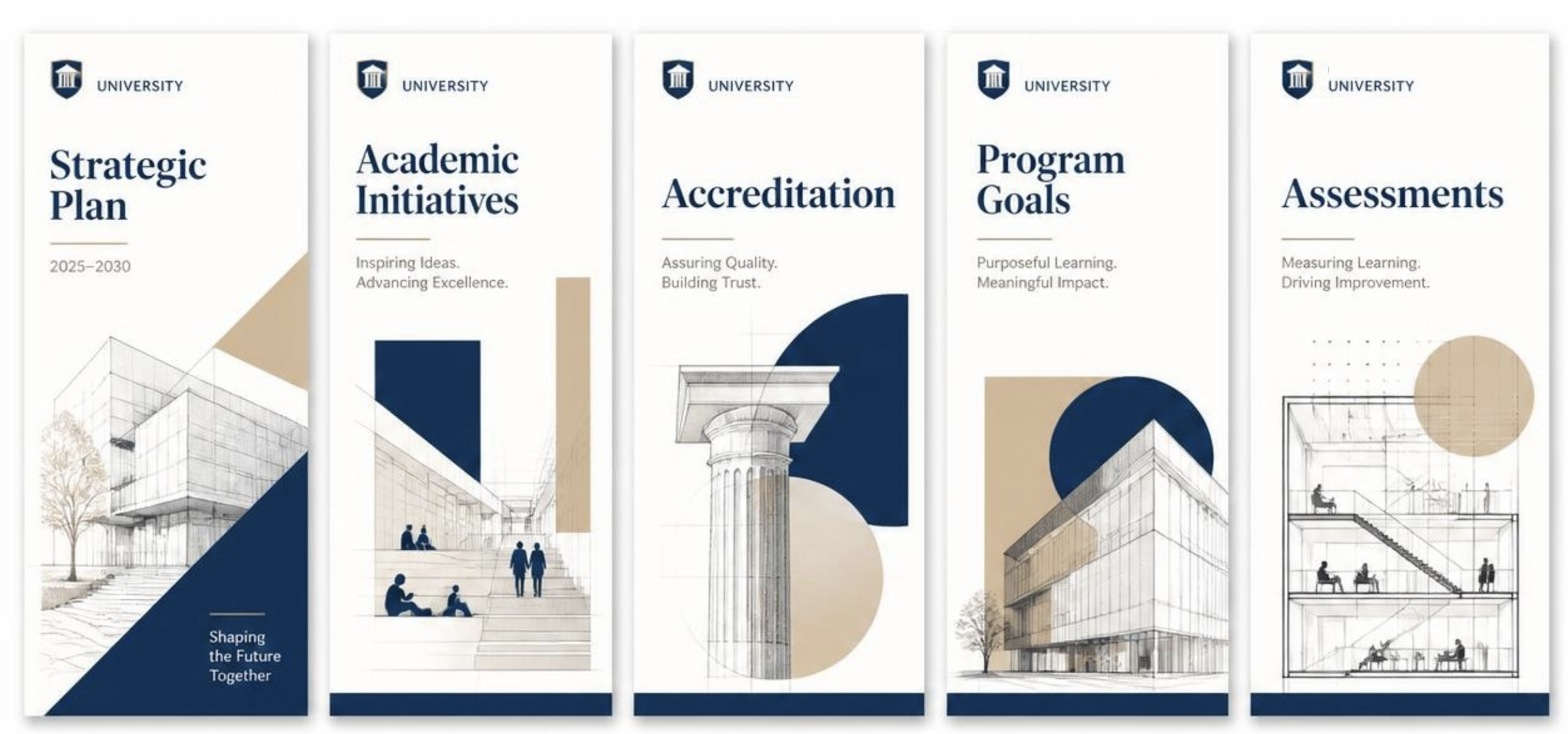
The purpose may already be present in strategic plans, academic initiatives, accreditation work, program goals, faculty aspirations, or student experiences. Different groups may already be working toward the same purpose without describing it in the same language. The opportunity of the capital project is to bring those ambitions together before the need becomes fixed.
That matters because purpose rarely belongs to any one group. What looks like an academic priority from one perspective may also be a student-experience issue, an institutional priority, an operational challenge, or an opportunity the physical environment can help unlock. Bringing those perspectives together can reveal connections that no one group could see on its own—and sometimes surface ambitions that had never before been understood as part of the same project.
The goal isn't creating another vision statement. It's shared clarity about a deceptively simple question: What should be possible after we make this investment?
This post is part of a six-part series asking “How do we know what a university capital project needs to accomplish?” Link to the other posts below.