
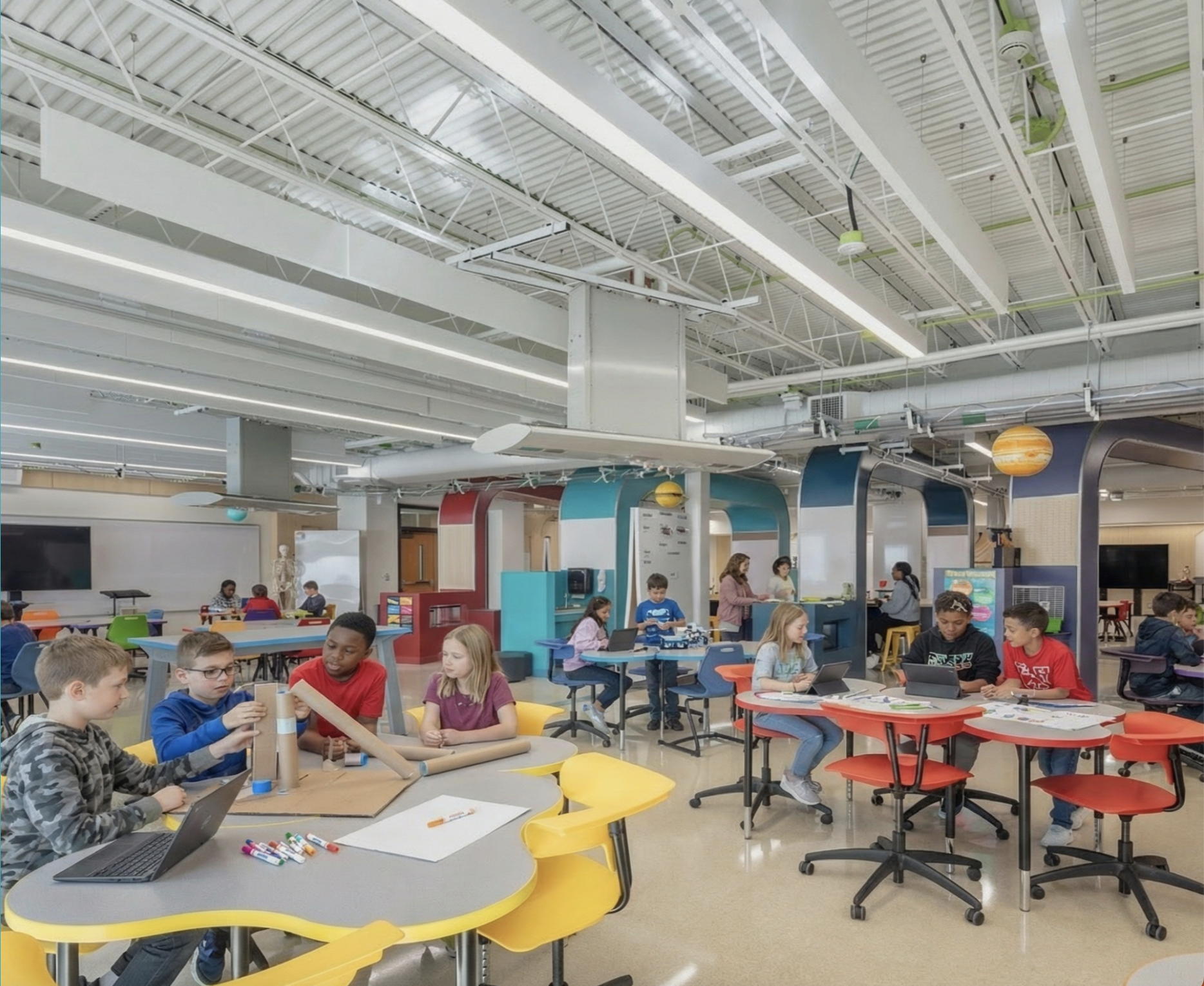
Learning Hub
Every great project begins with a question. But the questions we start with aren’t always the ones that lead to the best solutions. Questions like How many units do we need? Where should the addition go? already point toward an answer. At Ashley McGraw, we like to start one step earlier: What can we learn from the people who use this space every day? What opportunities might we discover if we look at the problem differently? What are we trying to make possible?
The Learning Hub is where we share the questions we are exploring with our clients. Sometimes we have answers, sometimes we have more questions. But we always learn through the process.
Explore by Series
In a Learning Hub Series, we explore a “big question” in depth over a series of posts. Read the series or skip to individual posts to hear about how we have explored these big questions with our clients.
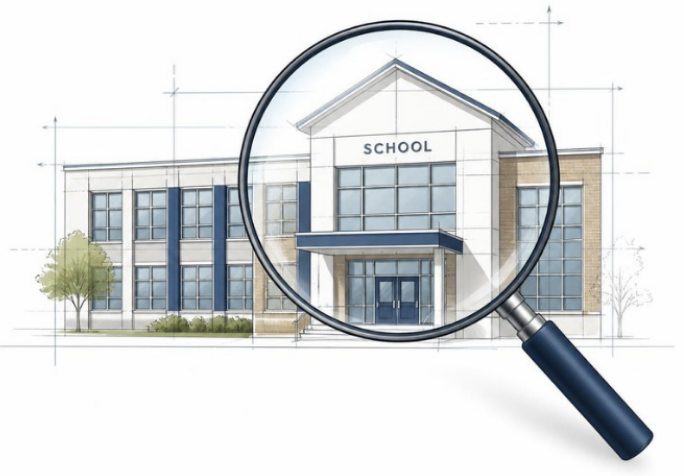
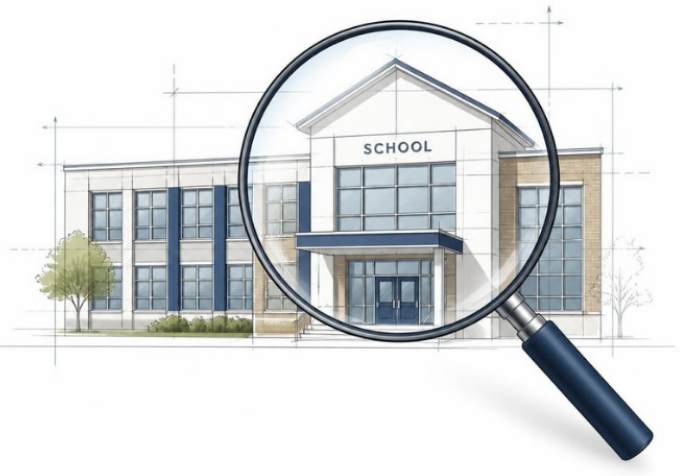
How can we uncover what’s possible in an existing school?
How do we know what a university capital project needs to accomplish?
Explore by Categories
Click on the listed categories to see posts related to that area of interest.
How can we uncover what’s possible in an existing school?
Existing buildings hold evidence of possibilities for renovation that may not show up in a typical capital maintenance plan. In this post, we introduce how to increase the value of building renovation through investigation.
Investigate the Workarounds
Educators don't wait 40 years for the next capital project to change how they teach. When a building doesn't support something they need to do, they find another way. What do their workarounds tell us about what the space wants to become?
Investigate What’s Already There
When a program needs 2,000 more square feet, it's tempting to start looking for 2,000 square feet to add. But what if the building already has them—just not in a space labeled for that program?…
Investigate the “Fix”
A major infrastructure project creates a rare moment when parts of a school that are normally fixed become changeable. The conventional goal is to fix the problem and restore what was there. Investigation asks what that disruption might make possible.
Investigation Changes the Value of Renovation
A facilities plan helps a district understand what it has, what it needs, and where to invest. Investigation asks something different: What haven't we discovered yet?
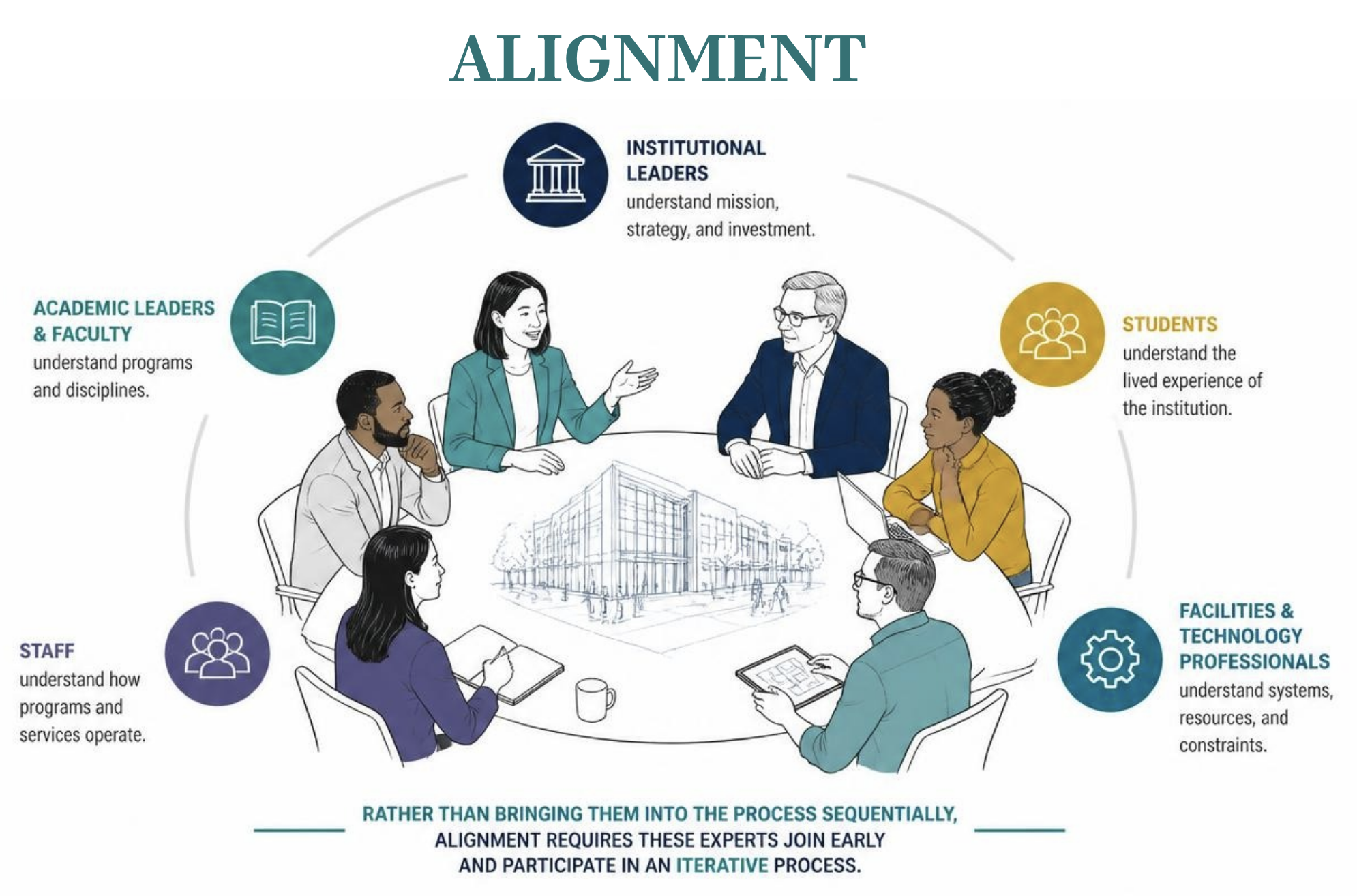
How Do We Know What a University Capital Project Really Needs to Accomplish?
Before a need becomes a capital plan, there is an opportunity to ask something more: What does this investment really need to accomplish?
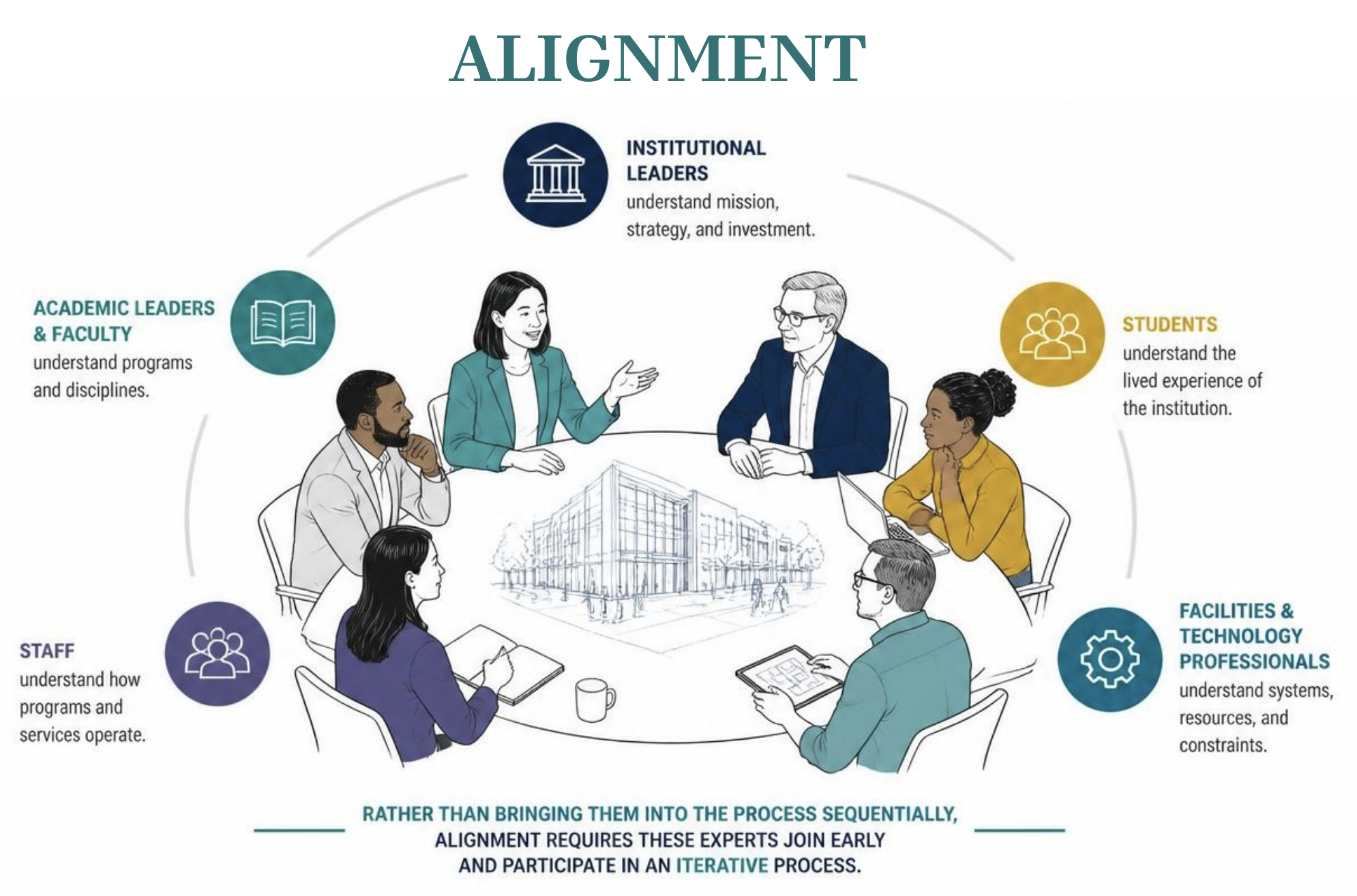
Align to Determine Purpose
A capital need often arrives already translated into physical terms. Before accepting that translation, alignment asks us to investigate the purpose behind it by answering: What are we actually trying to accomplish?
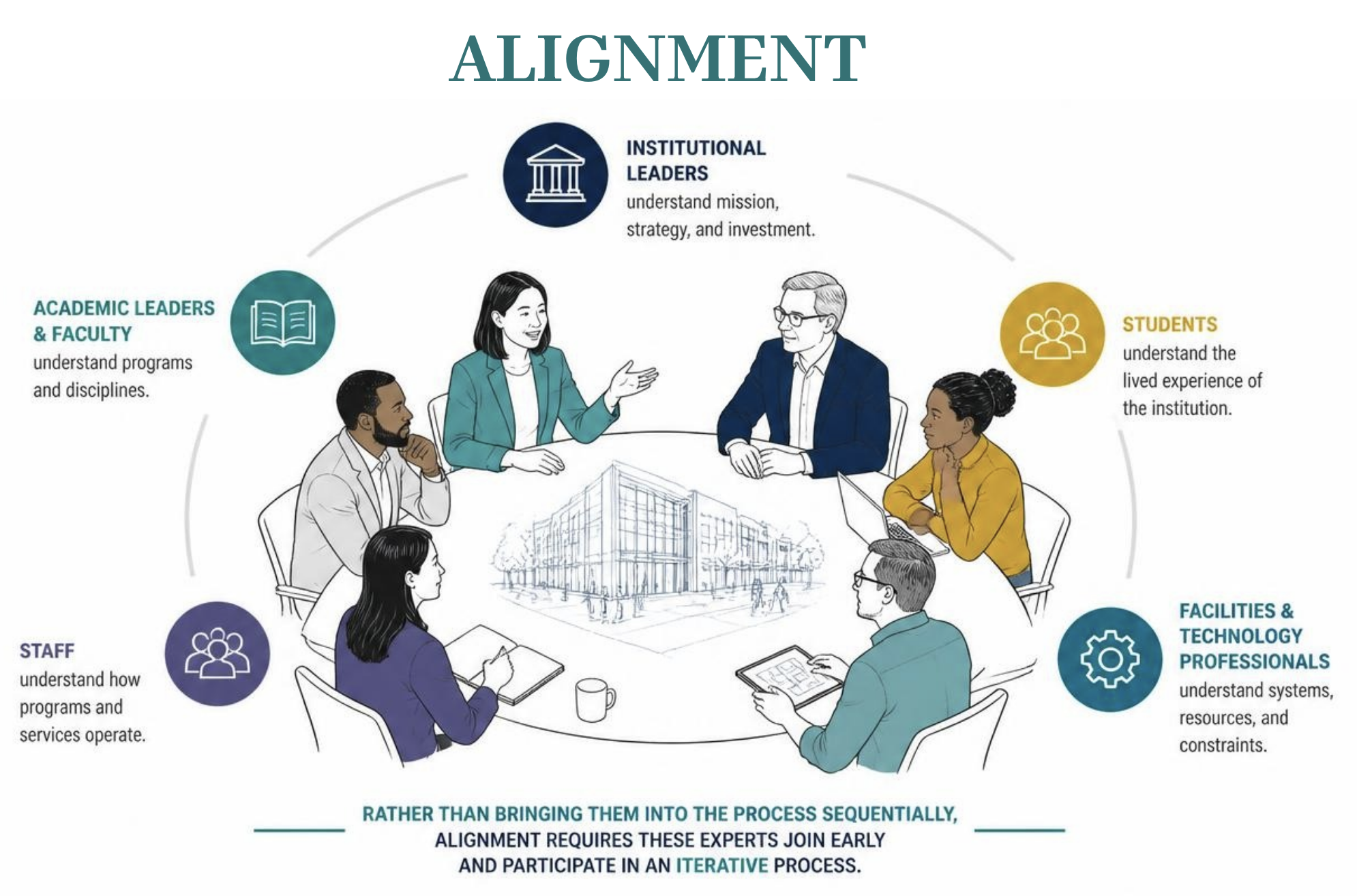
Align to Identify Experiences
Purpose describes what the institution wants to accomplish. Experience asks what that ambition means for the people who will live it.
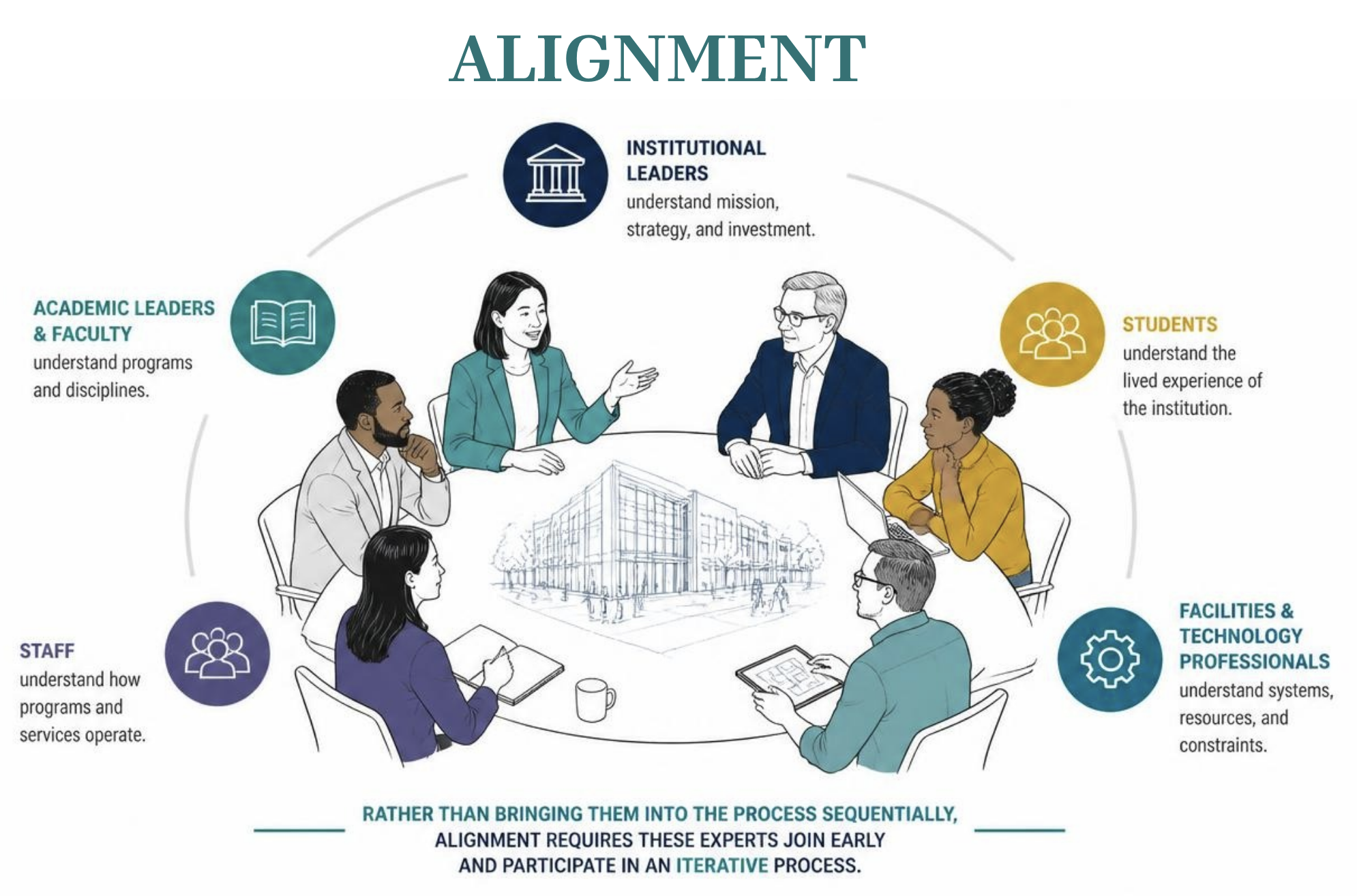
Align to Define Practices
Practices turn experiences into observable activity. They allow us to move from what we hope will happen to investigating what people actually do.
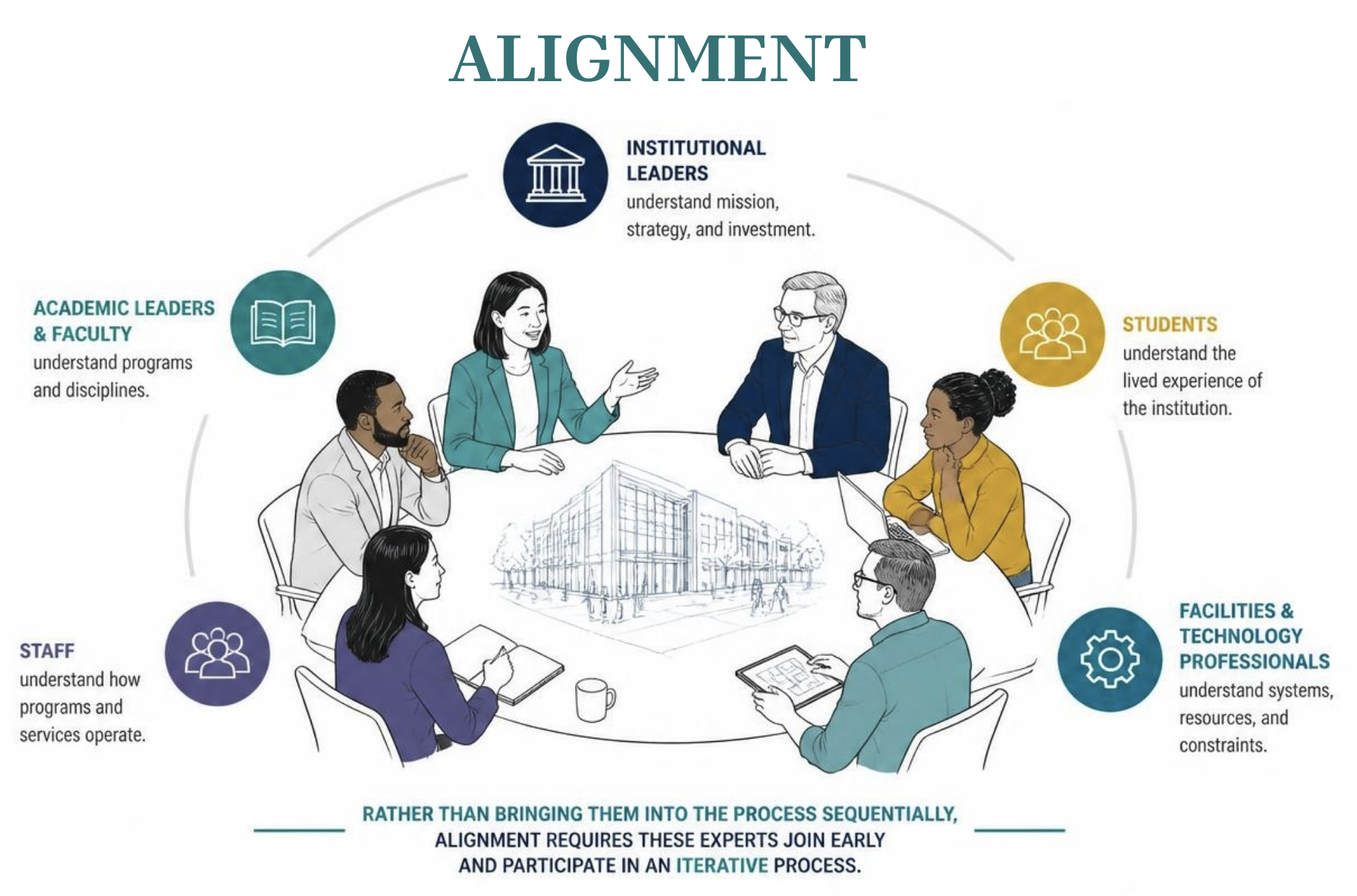
Align to Uncover Possibilities in a Space
It's tempting to translate familiar aspirations into equally familiar spatial responses. But alignment asks us to keep investigating before deciding that they are the response. Space needs to be part of the investigation, too.
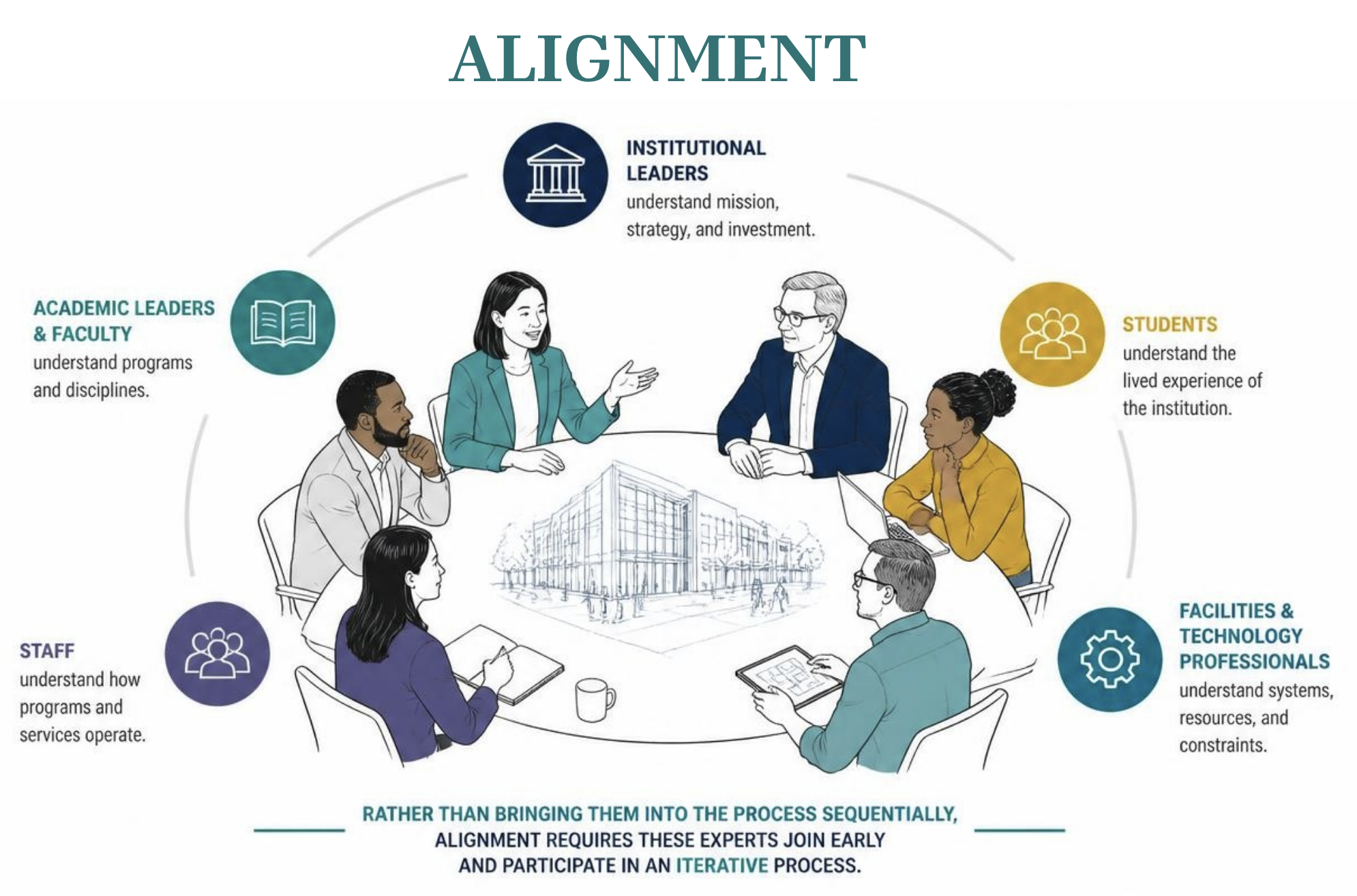
Alignment Case Studies
Explore several case studies of how we work with clients to bring alignment to their capital projects.