
Perspectives
Great design emerges from curiosity, collaboration, and a willingness to see things differently. At Ashley McGraw, we believe that exploring new ideas and learning from the experiences of others opens up possibilities for creating better places.
Perspectives is where we share the ideas, insights, and experiences that emerge from our work with clients, colleagues, and communities. It's a place to explore different ways of thinking about architecture, design, and the people and places they shape.

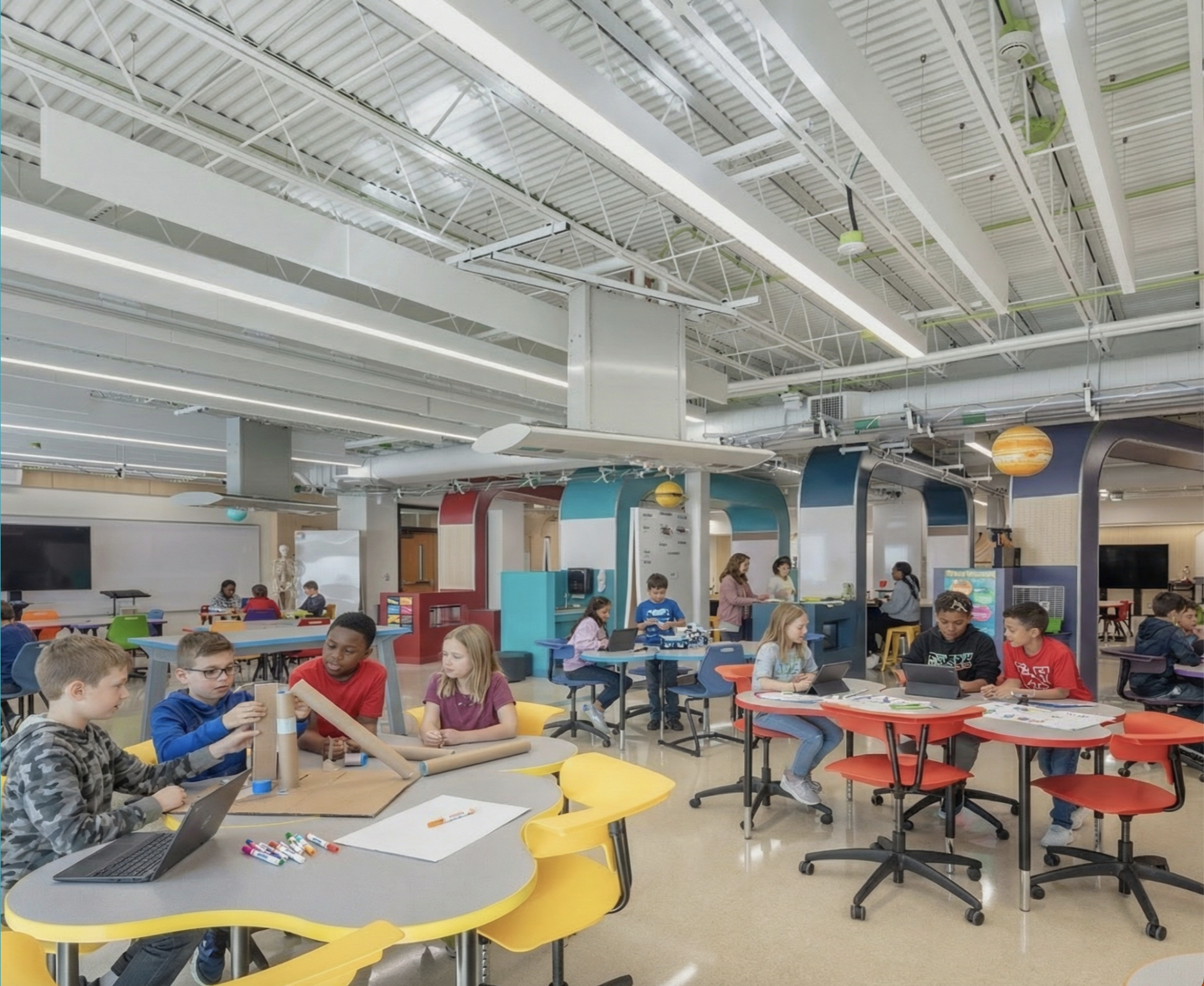
How can we uncover what’s possible in an existing school?
Existing buildings hold evidence of possibilities for renovation that may not show up in a typical capital maintenance plan. In this post, we introduce how to increase the value of building renovation through investigation.

Investigate the Workarounds
Educators don't wait 40 years for the next capital project to change how they teach. When a building doesn't support something they need to do, they find another way. What do their workarounds tell us about what the space wants to become?

Investigate What’s Already There
When a program needs 2,000 more square feet, it's tempting to start looking for 2,000 square feet to add. But what if the building already has them—just not in a space labeled for that program?…

Investigate the “Fix”
A major infrastructure project creates a rare moment when parts of a school that are normally fixed become changeable. The conventional goal is to fix the problem and restore what was there. Investigation asks what that disruption might make possible.

Investigation Changes the Value of Renovation
A facilities plan helps a district understand what it has, what it needs, and where to invest. Investigation asks something different: What haven't we discovered yet?

How Do We Know What a University Capital Project Really Needs to Accomplish?
Before a need becomes a capital plan, there is an opportunity to ask something more: What does this investment really need to accomplish?

Align to Determine Purpose
A capital need often arrives already translated into physical terms. Before accepting that translation, alignment asks us to investigate the purpose behind it by answering: What are we actually trying to accomplish?

Align to Identify Experiences
Purpose describes what the institution wants to accomplish. Experience asks what that ambition means for the people who will live it.

Align to Define Practices
Practices turn experiences into observable activity. They allow us to move from what we hope will happen to investigating what people actually do.

Align to Uncover Possibilities in a Space
It's tempting to translate familiar aspirations into equally familiar spatial responses. But alignment asks us to keep investigating before deciding that they are the response. Space needs to be part of the investigation, too.

Alignment Case Studies
Explore several case studies of how we work with clients to bring alignment to their capital projects.
Explore by Series
In a Learning Hub Series, we explore a “big question” in depth over a series of posts. Read the series or skip to individual posts to hear about how we have explored these big questions with our clients.